
If you’ve ever stood in front of an antique piece and wondered whether painting it is a good idea—or a terrible mistake—you’re not alone! It’s one of the most common questions we hear, especially from people buying their first antique.
The truth is, there isn’t a single right answer. Whether a piece should be refinished (painted or re-stained), restored (brought back to its original look), or left as-is depends on the furniture itself and how it’s going to be used in your home.
At Burke & Bradford, restoration always starts with a few simple questions: What’s worth preserving? What’s holding the piece back? And how will it realistically live in today’s space? And maybe most importantly, what do you like?
When Leaving It Original Makes Sense
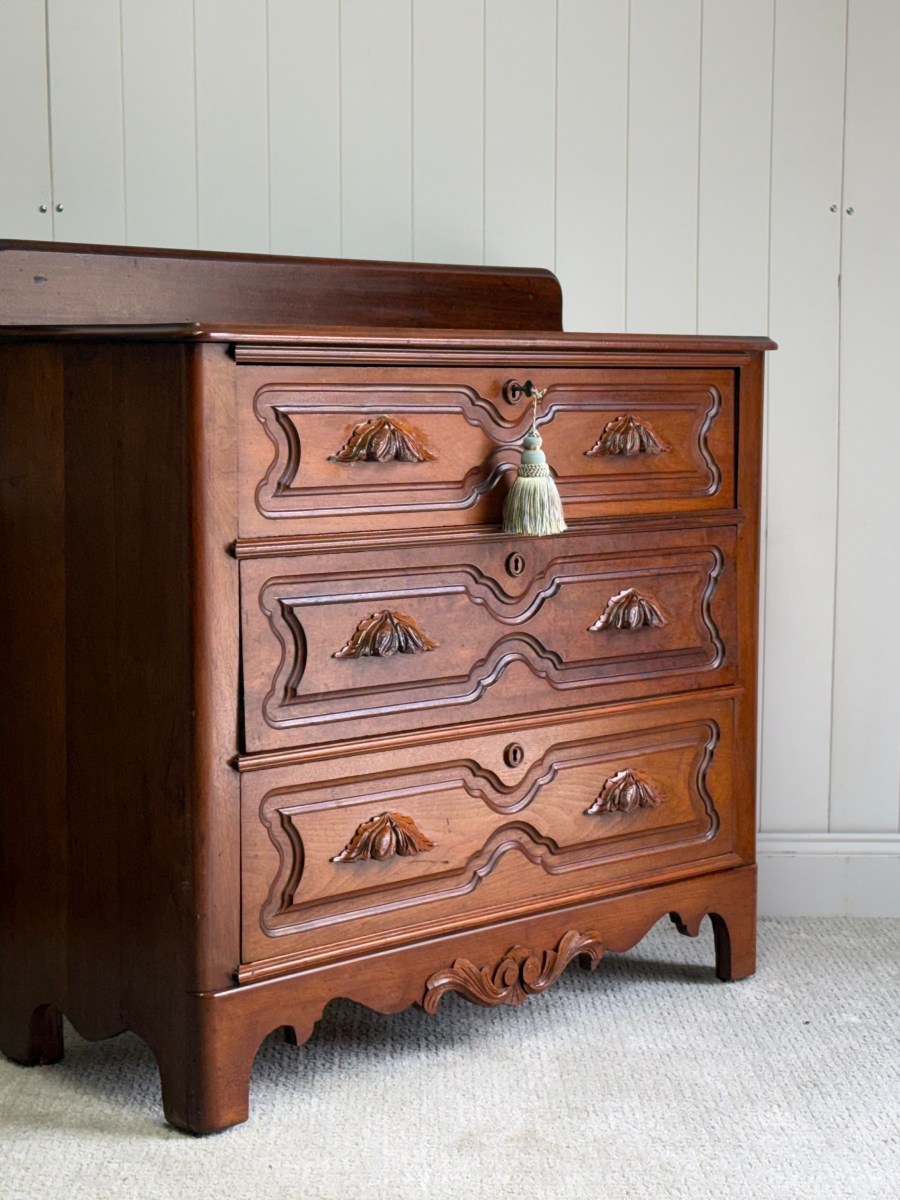
Some furniture benefits from preservation. When an original finish has aged well and still reflects the character of the piece, we focus on careful restoration rather than reinvention. These are often pieces where the patina adds warmth and history without feeling heavy or dated. Examples would be farmhouse sideboards, victorian dressers, and other items that are beautiful and still earn a place in the design of a room.
In those cases, our goal is to stabilize, clean, and protect the finish—allowing the craftsmanship and materials to speak for themselves. The old saying still rings true: If it’s not broke, don’t fix it.
When Painting (or Refinishing) Is the Better Choice
Other pieces tell a different story. Some finishes are simply too damaged, uneven, or visually heavy for modern living. That doesn’t mean the piece has lost its value—it often means it just needs a thoughtful update.
Refinishing, when done well, isn’t about erasing history—it’s about clarifying it. We often work with clients who love the durability, function, and craftsmanship of a piece that’s been passed down, but struggle to connect with its appearance. And honestly, we understand.
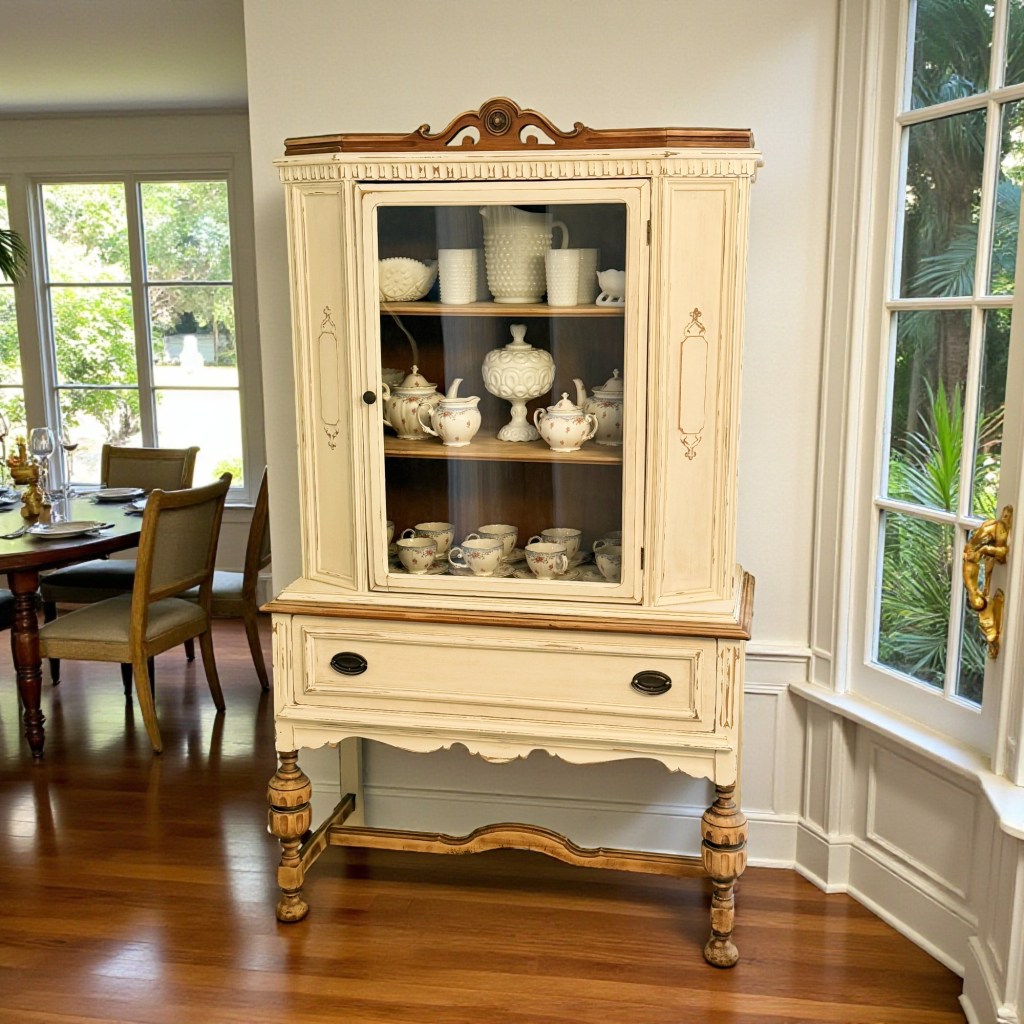
One of the first pieces I ever refinished was an antique hutch my wife found for a steal—just $100—on an online marketplace (pictured above). The size and function were perfect for a small wall in our formal dining room, but years of sitting next to a window had left the original finish worn and faded. Rather than forcing the piece to stay exactly as it was, we chose a two-tone approach: antique white paired with the original stained wood. A touch of light distressing helped preserve its character while giving it a softer, more lived-in feel.
The result was a piece that felt refreshed but familiar—and one my wife (and nearly everyone who sees it) genuinely loves.
How We Choose Paint Colors
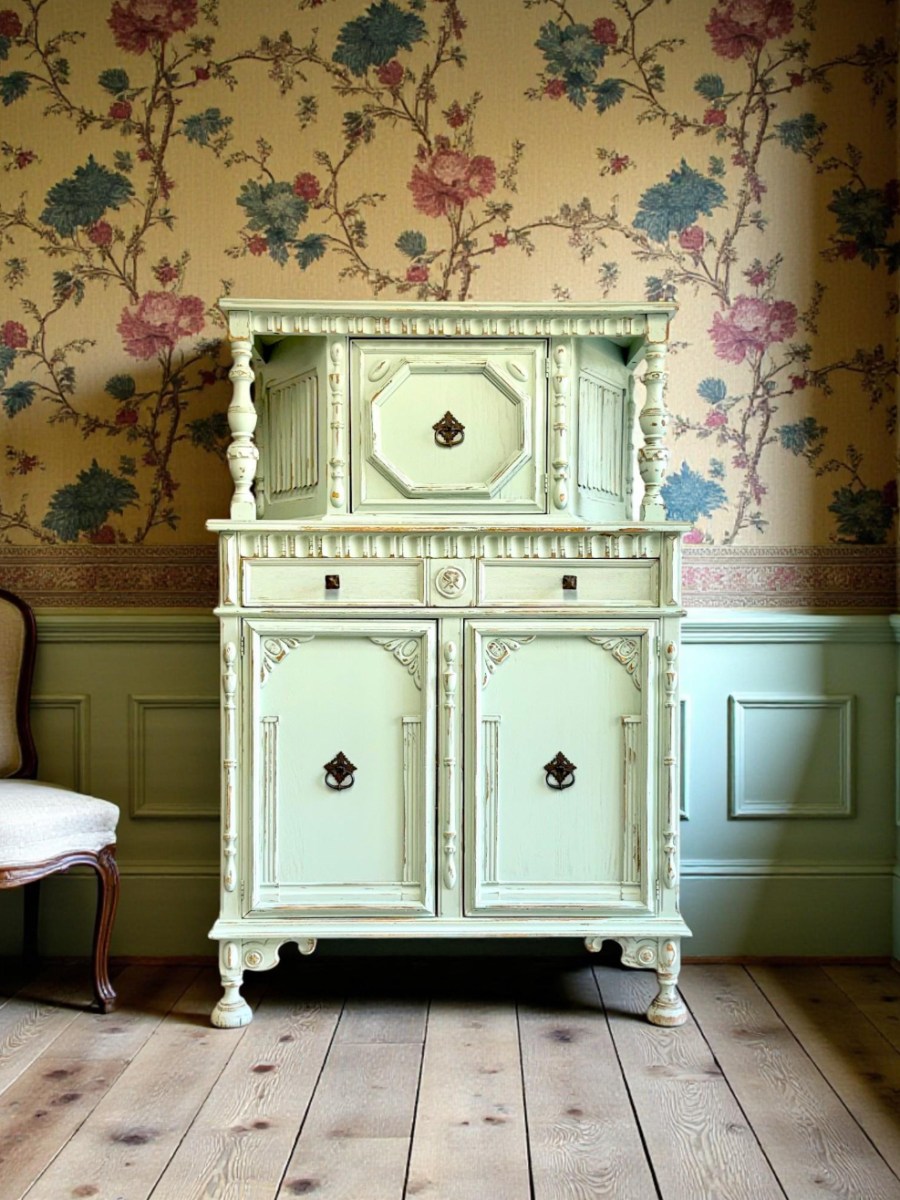
When we do paint a piece, restraint is key. We avoid trend-driven colors in favor of tones that have proven their staying power: black, white, antique white, soft greens, and other grounded neutrals.
These colors work across different homes and styles, and they age gracefully. More importantly, they allow the shape and construction of the furniture to remain the focus, rather than the finish stealing the spotlight. There are several product lines we use and recommend: Fusion Mineral Paint, Dixie Belle paint lines, Melange paint, among others.
Living with Antiques (Without Overthinking It)
Antique furniture doesn’t need to feel precious or untouchable to be valued. While some heirloom pieces are best admired, many are meant to be used—sideboards that hold everyday dishes, tables that show signs of regular life, cabinets that function as they were intended.
Thoughtful restoration helps remove the pressure of “doing it wrong” and allows antique furniture to feel approachable, livable, and useful in modern homes.
What About You?
If you’re trying to decide whether a piece should be painted, refinished, or left as is, consider a few practical questions:
- How will the piece be used in your home? Will it be part of everyday life, or more decorative?
- Does the current finish add character—or distract from the craftsmanship? Is the wear charming, or does it overwhelm the piece?
- Does the piece feel at home in your space as it is? Or would an updated finish help it integrate more naturally with the rest of your home?
- Are you preserving it for the next generation—or making it work for this one?
There’s no single right answer. The best choice is the one that allows the piece to be used, enjoyed, and appreciated for years to come.

 Burke & Bradford